
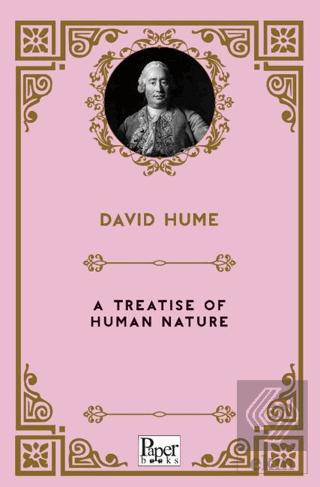
Written when he was only in his twenties, A Treatise of Human Nature is David Hume's bold and revolutionary attempt to place the study of human nature on a scientific foundation. Rejecting abstract metaphysics, Hume turns instead to experience, perception, and emotion as the true sources of human knowledge.
In this groundbreaking work, Hume examines the nature of understanding, belief, causation, morality, and personal identity, challenging long-held assumptions about reason and the self. Arguing that reason is ultimately governed by passion, he reshapes modern philosophy with a radical skepticism that continues to influence thought today. A Treatise of Human Nature stands as one of the most important texts of empiricism and a cornerstone of Enlightenment philosophy.
-
-
%22İNDİRİM148,00 115,44


Written when he was only in his twenties, A Treatise of Human Nature is David Hume's bold and revolutionary attempt to place the study of human nature on a scientific foundation. Rejecting abstract metaphysics, Hume turns instead to experience, perception, and emotion as the true sources of human knowledge.
In this groundbreaking work, Hume examines the nature of understanding, belief, causation, morality, and personal identity, challenging long-held assumptions about reason and the self. Arguing that reason is ultimately governed by passion, he reshapes modern philosophy with a radical skepticism that continues to influence thought today. A Treatise of Human Nature stands as one of the most important texts of empiricism and a cornerstone of Enlightenment philosophy.
| Taksit Sayısı | Taksit tutarı | Genel Toplam |
|---|---|---|
| Tek Çekim | 623,20 | 623,20 |
| 2 | 324,06 | 648,13 |
| 3 | 224,35 | 673,06 |
| Taksit Sayısı | Taksit tutarı | Genel Toplam |
|---|---|---|
| Tek Çekim | 623,20 | 623,20 |
| 2 | 324,06 | 648,13 |
| 3 | 224,35 | 673,06 |