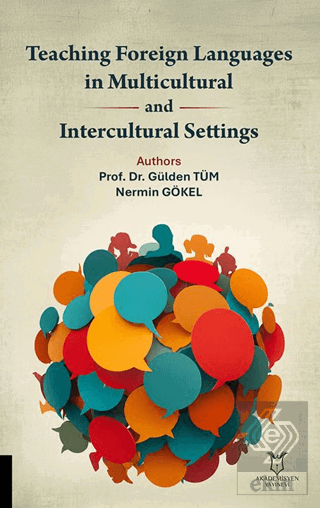
In foreign language education, individuals do not merely acquire linguistic knowledge; they develop ways of understanding themselves, others, and the social world. This book investigates beyond the conventional boundaries of grammar, vocabulary, pronunciation, and communicative competence. It approaches language learning and teaching through the interrelated dimensions of identity, culture, migration, multilingualism, intercultural communication, social justice, and educational equity.
The book offers a comprehensive framework for understanding foreign language classrooms as socially, culturally, and affectively complex learning environments. It emphasizes the importance of recognizing learners' diverse linguistic repertoires, lived experiences, cultural backgrounds, and forms of participation.
Designed for foreign language teachers, teacher educators, researchers, graduate students, and curriculum developers, this book provides both conceptual insight and practical direction for developing more inclusive, critical, and responsive approaches to foreign language education in multicultural societies.
The book contributes to current discussions on intercultural language education by highlighting the ethical responsibility of educators to create learning spaces in which learners' voices are acknowledged, differences are respected, and participation is supported with dignity.

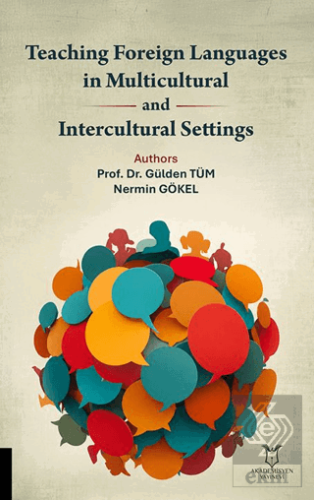
In foreign language education, individuals do not merely acquire linguistic knowledge; they develop ways of understanding themselves, others, and the social world. This book investigates beyond the conventional boundaries of grammar, vocabulary, pronunciation, and communicative competence. It approaches language learning and teaching through the interrelated dimensions of identity, culture, migration, multilingualism, intercultural communication, social justice, and educational equity.
The book offers a comprehensive framework for understanding foreign language classrooms as socially, culturally, and affectively complex learning environments. It emphasizes the importance of recognizing learners' diverse linguistic repertoires, lived experiences, cultural backgrounds, and forms of participation.
Designed for foreign language teachers, teacher educators, researchers, graduate students, and curriculum developers, this book provides both conceptual insight and practical direction for developing more inclusive, critical, and responsive approaches to foreign language education in multicultural societies.
The book contributes to current discussions on intercultural language education by highlighting the ethical responsibility of educators to create learning spaces in which learners' voices are acknowledged, differences are respected, and participation is supported with dignity.
| Taksit Sayısı | Taksit tutarı | Genel Toplam |
|---|---|---|
| Tek Çekim | 328,00 | 328,00 |
| 2 | 170,56 | 341,12 |
| 3 | 118,08 | 354,24 |
| Taksit Sayısı | Taksit tutarı | Genel Toplam |
|---|---|---|
| Tek Çekim | 328,00 | 328,00 |
| 2 | 170,56 | 341,12 |
| 3 | 118,08 | 354,24 |
-
-
%18İNDİRİM375,00 307,50
-
%18İNDİRİM662,50 543,25
-
%18İNDİRİM900,00 738,00
-
%18İNDİRİM825,00 676,50
-
%18İNDİRİM900,00 738,00
-
%18İNDİRİM375,00 307,50
-
%18İNDİRİM312,50 256,25
-
%18İNDİRİM500,00 410,00
-
%18İNDİRİM375,00 307,50