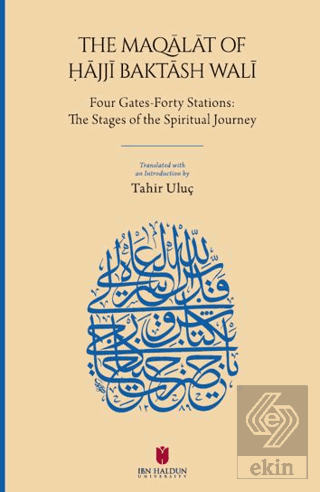
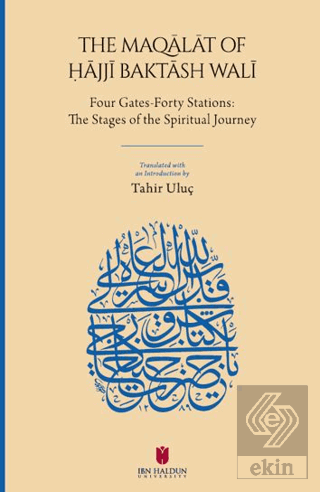
Maqalat of ?ajji Baktash Wali presents the first English translation of the Maqalat, the foundational text of the Bektashi Sufi order, which profoundly influenced religious and social life across Anatolia and the Balkans for centuries. Written by ?ajji Baktash Wali —a 13th century Anatolian Sufi—this profound work charts a spiritual journey along the Four Gates and Forty Stations, guiding seekers through stages of ethical refinement and inner transformation toward closeness with the Divine. Originally addressed to communities newly entering Islam, its clear and didactic style played a vital role in the Islamization and Turkification of Anatolia, deeply embedding itself in the region's cultural and spiritual fabric. Although widely revered, Maqalat has long remained inaccessible to English-speaking audiences. This translation bridges that gap, revealing a central yet often overlooked tradition of Turkish ta?awwuf.
Given the absence of the original Arabic manuscript, this edition relies on Turkish versions of the Maqalat, primarily drawing from the edition by Professor Esad Coşan. The translator carefully tackles the challenges of transmission to provide a faithful and accessible rendering for English readers.
By bringing this seminal work to English audiences, the translation not only enriches resources for scholars of Sufism, Islamic studies, comparative religion, and Turkish cultural history but also offers a valuable articulation of Islam for general readers—introducing the enduring legacy of the Baktashi tradition to a broader world.
Maqalat of ?ajji Baktash Wali presents the first English translation of the Maqalat, the foundational text of the Bektashi Sufi order, which profoundly influenced religious and social life across Anatolia and the Balkans for centuries. Written by ?ajji Baktash Wali —a 13th century Anatolian Sufi—this profound work charts a spiritual journey along the Four Gates and Forty Stations, guiding seekers through stages of ethical refinement and inner transformation toward closeness with the Divine. Originally addressed to communities newly entering Islam, its clear and didactic style played a vital role in the Islamization and Turkification of Anatolia, deeply embedding itself in the region's cultural and spiritual fabric. Although widely revered, Maqalat has long remained inaccessible to English-speaking audiences. This translation bridges that gap, revealing a central yet often overlooked tradition of Turkish ta?awwuf.
Given the absence of the original Arabic manuscript, this edition relies on Turkish versions of the Maqalat, primarily drawing from the edition by Professor Esad Coşan. The translator carefully tackles the challenges of transmission to provide a faithful and accessible rendering for English readers.
By bringing this seminal work to English audiences, the translation not only enriches resources for scholars of Sufism, Islamic studies, comparative religion, and Turkish cultural history but also offers a valuable articulation of Islam for general readers—introducing the enduring legacy of the Baktashi tradition to a broader world.
| Taksit Sayısı | Taksit tutarı | Genel Toplam |
|---|---|---|
| Tek Çekim | 346,50 | 346,50 |
| 2 | 180,18 | 360,36 |
| 3 | 124,74 | 374,22 |
| Taksit Sayısı | Taksit tutarı | Genel Toplam |
|---|---|---|
| Tek Çekim | 346,50 | 346,50 |
| 2 | 180,18 | 360,36 |
| 3 | 124,74 | 374,22 |
-
-
%23İNDİRİM650,00 500,50
-
-
-
%23İNDİRİM1.800,00 1.386,00
-
-%23
 Stokta yok%23İNDİRİM1.800,00 1.386,00
 -
%23İNDİRİM460,00 354,20
-
%23İNDİRİM600,00 462,00
-
-
%23İNDİRİM1.000,00 770,00