
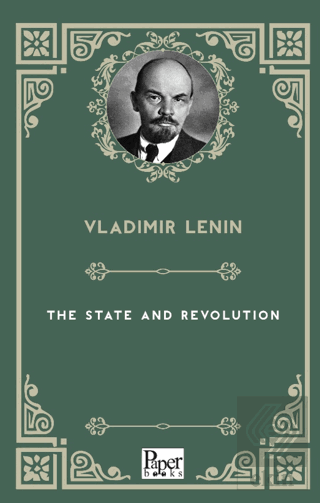

Vladimir Lenin's The State and Revolution stands as one of the most important and influential texts in Marxist theory. Written in 1917 on the eve of the October Revolution, this work offers a penetrating analysis of the nature of the state, its role in class struggle, and the concept of the dictatorship of the proletariat. Drawing on the ideas of Marx and Engels, Lenin argues that the state is an instrument of class domination — a mechanism by which the ruling classes maintain their power. For Lenin, revolution means not simply seizing the existing state apparatus, but dismantling it and replacing it with a new form of power: the democratic rule of the working class. This vision radically redefined socialist theory and the strategy of revolutionary change. The State and Revolution remains central to ongoing debates about freedom, democracy, and power. Lenin's incisive arguments reveal the state as a temporary tool in the struggle for equality — a bridge toward a stateless, classless society. More than a historical treatise, this work endures as a revolutionary manifesto that challenges readers to rethink the meaning of justice, authority, and human liberation.
Vladimir Lenin's The State and Revolution stands as one of the most important and influential texts in Marxist theory. Written in 1917 on the eve of the October Revolution, this work offers a penetrating analysis of the nature of the state, its role in class struggle, and the concept of the dictatorship of the proletariat. Drawing on the ideas of Marx and Engels, Lenin argues that the state is an instrument of class domination — a mechanism by which the ruling classes maintain their power. For Lenin, revolution means not simply seizing the existing state apparatus, but dismantling it and replacing it with a new form of power: the democratic rule of the working class. This vision radically redefined socialist theory and the strategy of revolutionary change. The State and Revolution remains central to ongoing debates about freedom, democracy, and power. Lenin's incisive arguments reveal the state as a temporary tool in the struggle for equality — a bridge toward a stateless, classless society. More than a historical treatise, this work endures as a revolutionary manifesto that challenges readers to rethink the meaning of justice, authority, and human liberation.
| Taksit Sayısı | Taksit tutarı | Genel Toplam |
|---|---|---|
| Tek Çekim | 164,00 | 164,00 |
| 2 | 85,28 | 170,56 |
| 3 | 59,04 | 177,12 |
| Taksit Sayısı | Taksit tutarı | Genel Toplam |
|---|---|---|
| Tek Çekim | 164,00 | 164,00 |
| 2 | 85,28 | 170,56 |
| 3 | 59,04 | 177,12 |