
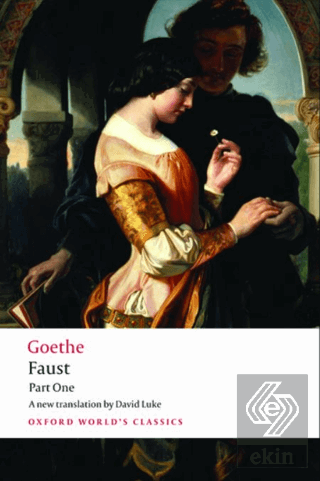
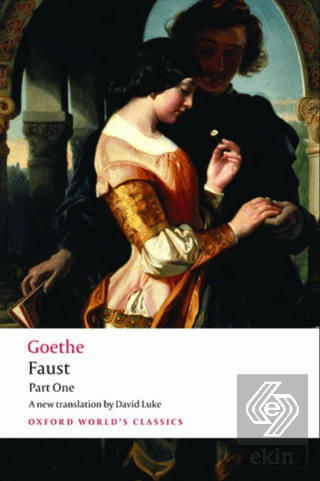
The legend of Faust grew up in the sixteenth century, a time of transition between medieval and modern culture in Germany. Johann Wolfgang von Goethe (1749-1832) adopted the story of the wandering conjuror who accepts Mephistopheless offer of a pact, selling his soul for the devils greater knowledge; over a period of 60 years he produced one of the greatest dramatic and poetic masterpieces of European literature.
David Lukes recent translation, specially commissioned for The Worlds Classics series, has all the virtues of previous classic translations of Faust, and none of their shortcomings. Cast in rhymed verse, following the original, it preserves the essence of Goethes meaning without sacrifice to archaism or over-modern idiom. It is as near an 'equivalent rendering of the German as has been achieved.
-
-
-
-
-
-
%22İNDİRİM110,00 85,80




The legend of Faust grew up in the sixteenth century, a time of transition between medieval and modern culture in Germany. Johann Wolfgang von Goethe (1749-1832) adopted the story of the wandering conjuror who accepts Mephistopheless offer of a pact, selling his soul for the devils greater knowledge; over a period of 60 years he produced one of the greatest dramatic and poetic masterpieces of European literature.
David Lukes recent translation, specially commissioned for The Worlds Classics series, has all the virtues of previous classic translations of Faust, and none of their shortcomings. Cast in rhymed verse, following the original, it preserves the essence of Goethes meaning without sacrifice to archaism or over-modern idiom. It is as near an 'equivalent rendering of the German as has been achieved.
| Taksit Sayısı | Taksit tutarı | Genel Toplam |
|---|---|---|
| Tek Çekim | 496,80 | 496,80 |
| 2 | 258,34 | 516,67 |
| 3 | 178,85 | 536,54 |
| Taksit Sayısı | Taksit tutarı | Genel Toplam |
|---|---|---|
| Tek Çekim | 496,80 | 496,80 |
| 2 | 258,34 | 516,67 |
| 3 | 178,85 | 536,54 |